5 Essential Features for the Modern Sports Website Designs
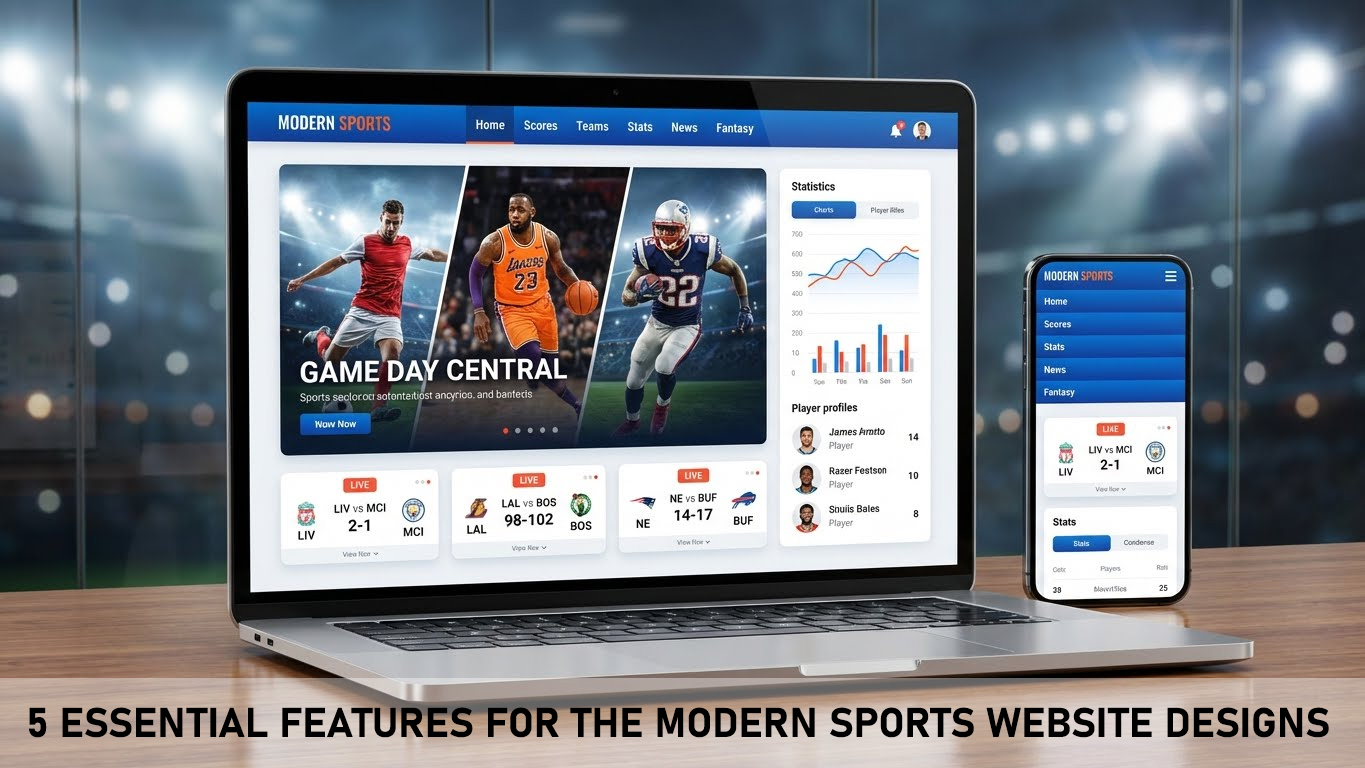

Sports websites have come a long way from simple scoreboards and match schedules. The audience today wants speed, interactivity, personalization, and an experience that reflects the thrill of the game itself. Be it a website of the team, league, sports brand, athlete, or sports media, design has to capture emotion, energy, and functionality in equal measure.
The modern sports fan is digital, jumping between platforms, consuming on-the-go updates, and requiring visually immersive storytelling that pulls them deeper into the action. This means a sports website has to be much more than "informative"; it needs to be alive, dynamic, and responsive to the heat of the moment.
Below are the five core features that ensure the sports website remains trendy, interesting, and user-friendly. The points have been summarized by a top web design company.
The biggest reason most fans come to a sports site is to get an update, and they want those updates now. Real-time content is not optional; it is a requirement.
Why It Matters
Modern-day fans follow several teams, players, leagues, and tournaments. They would not continuously hit the refresh button for updates or wait for news articles to come online. Real-time updates keep the user engaged with the ongoing game, though not watching it live.
Key Elements to Include
Live, auto-refreshing scoreboards
Minute-by-minute match commentary
Real-time stats include possession, shots, fouls, player subs, and more.
Live tickers display key moments.
Goal, kick-off, half-time, and full-time notifications, plus breaking news from the world of sport
This feature immediately raises session time and brings users back multiple times a day, which is just what the modern sports platform needs.
Sports are emotional and the fan's connection to sports comes via the visuals-iconic images, behind-the-scenes footage, player celebrations, locker-room drama, and so on. That means that a sports website should feel visually dynamic at every scroll.
What This Looks Like in Practice
Full-width hero banners featuring action shots
Embedded video highlights
360° virtual stadium tours
Easily navigable photo galleries
Short-form content includes reels, GIFs, and motion graphics.
The more visually immersive the experience, the more an emotional bond between user and brand or team develops. Good-quality visuals make the website feel premium and modern; this will be important in holding the attention of younger audiences, especially Gen Z, who experience content first visually and second textually.
Sports fans are busy people - they browse during work, while on the go, between classes, or during the match itself. If your site doesn't load fast or isn't looking right on their phone, they're gone in a matter of seconds.
Mobile-first is no longer a nice-to-have; it's the norm.
Elements of an Effective, Easy-to-Navigate Sports Website
Clean, intuitive menus allow for rapid browsing.
Sticky nav for quick score, fixture and news toggling
Improved page loading, especially for those with heavy media content.
Clearly categorize the sport, team, league, and type of match.
Clean designs that showcase, not clutter, the content.
The modern sports site should be able to let the user check the score, watch a clip of the goal, and browse the players' stats-all without his or her having to wait or getting lost in some confusing menu. Smooth UX means trust, and it means better retention, too-two metrics every sports platform depends on.
sports are about community. For most fans, the best of all is discussing, celebrating, arguing, and analyzing events with other people. A modern sports website shouldn't be a source of information; rather, it should be a place where fans feel connected with each other.
Engagement Tools That Matter
Comment areas below matches, articles, and videos.
Fan polls and predictions: Who will win tonight? Who's the player of the season?
Fantasy leagues integrated with real-time statistics
Interactive quizzes and trivia
User-generated content sections for reactions and fan art
Membership or fan club portals that provide access to exclusives
It's not solely a matter of site time, but emotional investment. When fans feel they are part of something greater than themselves, they will come back more often and dive in more deeply, building out a strong digital ecosystem in support of the sport.
Although the five mentioned above are the major ones, modern sports websites have a few bonus features that enhance user experience even further.
Personalization & User Profiles
It can further provide personalized content by letting the user build or choose their favourite teams, sports, and players. A unique and relevant experience comprises a personalized feed, alerts, and a dashboard.
E-Commerce Integration
Everything, from match tickets down to official jerseys, contributes to the merchandising aspects of sports revenues. An aesthetically pleasing, secure shop section adds value and convenience.
Content Hub or Blog Section
In-depth interviews, match previews, tactical analysis, and opinion pieces add a wealth of depth and enhance SEO performance. Fans love stories, and this section is all about bringing those stories alive.
Accessibility Features
In-platform closed captions, audio descriptions, alt text for images, and easy toggles between contrasts go hand-in-hand with professionalism and inclusivity.
Why These Features Matter Today
The modern sporting ecosystem is highly competitive. Fans can look for information in a hundred different places-be it apps, TV channels, social media, or any other means. If your website doesn't give it to them fast, they're going to jump away. These five features are
Create an Immersive Experience
Increase time on site
Build Loyalty and Repeat Visits
Enhance brand identity
Keep the fan involved beyond match day
Above all, they bring life to the site, much like the sporting world they represent.
The modern sports website is not a digital brochure but an interactive arena: real-time updates that keep audiences on the edge, high-quality visuals that build excitement, and player profiles that deepen emotional connections. Mobile-friendly UX provides seamless browsing, while engagement tools foster community.
When all of these come together, the website stops being "just another platform" and transforms into a destination-a place to which fans return, recommend, and rely. If you create or enhance a sports-related website, addressing those core features will help you stay ahead, stay relevant, and provide an experience worthy of the energy and spirit of the sports world.
Looking for a reliable sports website development company to bring your sports brand, team, or gaming idea online? At FODUU, we are experts in designing engaging, mobile-friendly, and fast-loading sports websites and apps that are custom-made for your users. We do everything from integrating the e-commerce with the athlete profiles and live score features. Contact FODUU today to get started!