Top Medical Web Design Trends to Watch in 2026
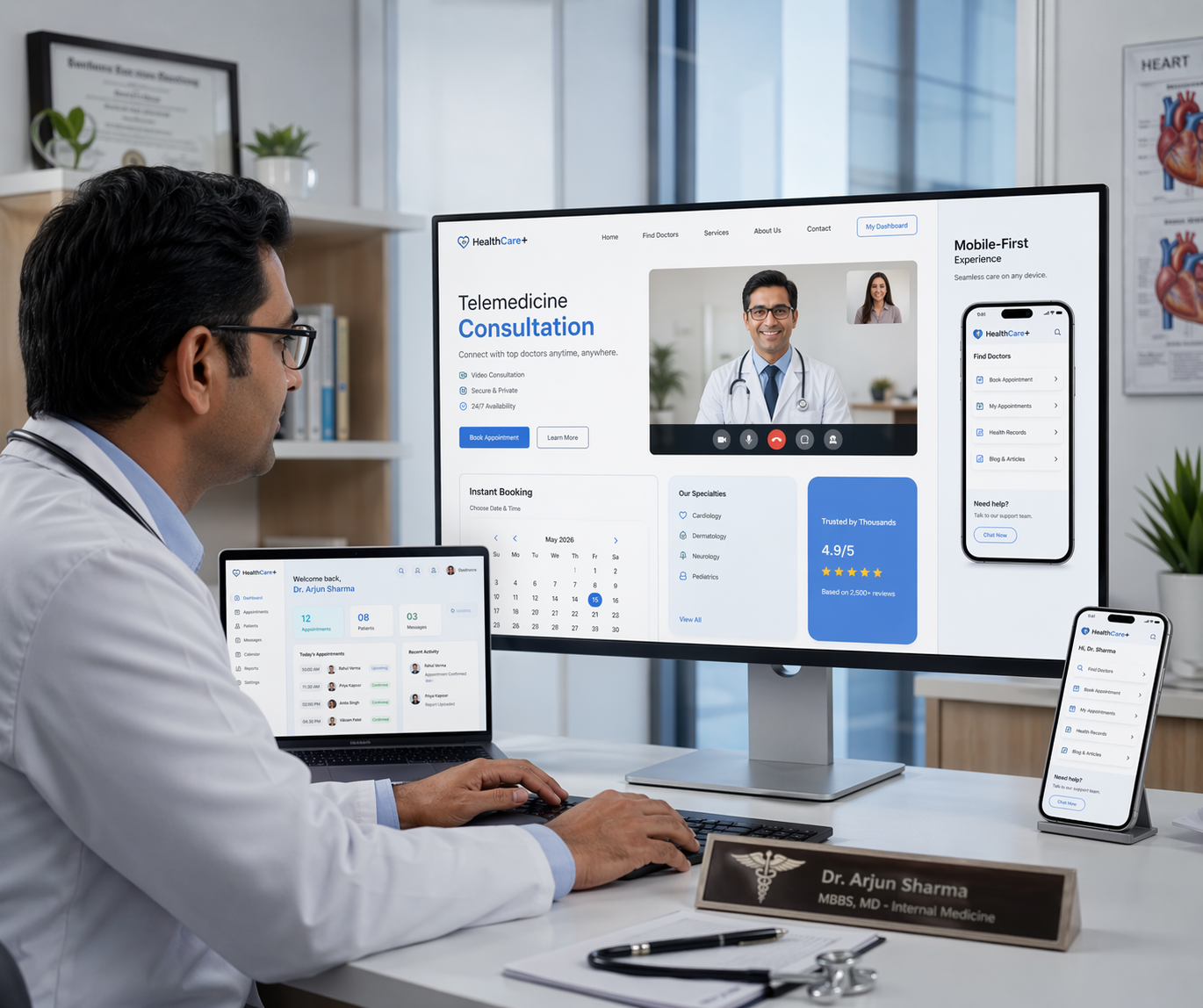

Healthcare website development is shifting from information-heavy layouts to emotion-driven, patient-first experiences. The new change is occurring because patients visiting medical websites are often anxious, time-sensitive and overwhelmed. That’s why to cater to their needs, modern design focuses on offering clarity, reassurance, and fast decision-making rather than cluttered content.
According to studies by Nielsen Norman Group, users form trust with a website in less than 1 second. As Healthcare is one of the most trust-sensitive industries, it becomes imperative that a website must have a well-designed interface, clear navigation points, readable fonts, and structured content that will significantly increase patient engagement and conversions.
For instance, today’s leading websites use simple pathways like Find a Doctor, Book Appointment, or Emergency Help that guide users instantly. The site's visual hierarchy, microcopy (short helpful text), and intuitive menus reduce confusion for users and improves accessibility for all age groups. If your website confuses patients, you will lose a patient. If it comforts them, it converts them.
In this post, you will learn that how a healthcare website development company prioritizes human-centred design principles, ensuring every element that serves its purpose. The result will be lower bounce rates, higher patient satisfaction, and stronger brand credibility.
Artificial Intelligence is transforming healthcare website development into a smart, adaptive experience. Websites now respond, learn, and personalize based on a user’s behaviour. According to a report by Accenture, nearly 74% of patients are open to using AI-powered tools that will assist in healthcare interactions. This change has led to use of widespread adoption of features like:
AI chatbots for instant query resolution
Symptom checkers for preliminary guidance
Personalized dashboards for returning users
Imagine a patient revisiting your website, and instantly sees recommended services, follow-ups, or nearby specialists available to serve you.
Smart interfaces improve a site’s efficiency by reducing waiting time, offering 24/7 support, and guiding users through complex medical decisions with ease. Now machine learning algorithms analyse behaviour patterns to deliver relevant content at the right moment, which also increase engagement and trust.
For a modern healthcare website development company, integrating AI is no longer a luxury but a necessity that will help us stay competitive. Now the smartest websites aren’t just providing information, but anticipating patient needs well before the patient can even ask.
With over 70% of healthcare searches happening on mobile devices according to Google Health Insights, a mobile-first design has become the backbone of a healthcare website development. Patients now want instant access, and they want to overcome their urgent situations. If a website has a delay of even 1 to 3 seconds in load time, then it can increase bounce rates by up to 32%.
That’s why speed optimization is critical for offering a good user experience. So, modern healthcare websites are built with:
Responsive layouts that adapt to all screen sizes
Thumb-friendly navigation for effortless browsing
Compressed images and fast-loading frameworks
A fast website not only improves user experience, but boosts search engine rankings, making it easier for patients to find your services online.
Website developers now make website as per Core Web Vitals benchmarks to ensure optimal performance, focusing on loading speed, interactivity, and visual stability.
A professional healthcare website design company ensures your site is not just mobile-friendly, but mobile-perfect. If your website isn’t fast and mobile-ready, it’s invisible.
Thanks to the rise of telemedicine, Healthcare websites are evolving into complete digital ecosystems in 2026. In the modern times, healthcare website development goes far beyond static pages, as it delivers real-time care experiences. The global telemedicine market is projected to reach $460 billion by 2030 (Fortune Business Insights). This shows that how rapidly digital care is expanding.
Patients now expect from a website:
Video consultations directly from the website
Online appointment scheduling
Digital prescriptions and reports
This integration eliminates the need for patients to physically visit meet a healthcare professional, offering convenience, speed, and accessibility, especially in remote areas. Further, websites are incorporating secure patient portals, where users can track medical history, upload reports, and communicate with doctors seamlessly. A healthcare website development company ensures that a website doesn’t just inform visitors, but actively delivers healthcare services.
In the healthcare industry, trust is everything which is built on security and accessibility. Therefore, a modern healthcare website must meet strict standards to protect sensitive patient data and ensure inclusivity. With regulations like HIPAA (USA) and GDPR (Europe) setting global benchmarks in place, websites must implement:
End-to-end data encryption
Secure login systems and patient portals
Consent-based data collection
According to IBM’s Data Breach Report, a healthcare website remains the most targeted industry for cyberattacks, which makes it a robust security architecture essential. The World Health Organization (WHO) estimates that over 1 billion people live with disabilities, meaning that websites must be usable for everyone.
So essential is to add features in the site like:
Screen reader compatibility
High-contrast design
Keyboard navigation
All of the above features are mandatory, and are no longer optional.
Accessibility is equally critical, so ensure your site’s compliance with both legal standards and ethical responsibilities. You must protect users while enhancing usability.
In a world overloaded with information, 2026 is embracing a powerful design philosophy in healthcare website development. It is minimalism or simplicity with a purpose.
Minimalist design is a strategic approach to creating calm, focused, and emotionally supportive digital experiences. In comparison with a cluttered website, then a simple looking site amplifies anxiety in users as they often arrive with stress, urgency, or uncertainty.
Research from Google UX studies shows that users consistently perceive visually simple websites as they are more trustworthy and easier to navigate. That’s why modern healthcare platforms have clean layouts, soft visuals, and distraction-free interfaces. Here are some key design elements that are dominating 2026:
Soothing colour palettes like blues, greens, and neutrals that evoke trust & calmness
Generous white space that improves readability and reduces cognitive overload
Clear typography that enhances accessibility across all age groups
Minimalism supports faster load times and better mobile performance, as it directly impacts SEO and user retention. But simplicity doesn’t mean to have a boring looking website. You must have subtle animations, micro-interactions, and authentic imagery in the site to have a human touch for the user.
A medical website design company understands that great design is not about adding more elements, but about removing everything that doesn’t serve a patient’s purpose. Remember, the most effective healthcare websites don’t shout for attention, they quietly build confidence, don’t overwhelms users, but comforts them, guides them, and ultimately earn their trust.
A fast, accessible and well-designed website converts patients and builds credibility. From strong data protection to calming, minimalist design, every detail matters in shaping a website’s patient experience. A professional healthcare web development company helps you to stay ahead by creating a platform that is secure, user-friendly, and conversion-focused.
If you want to grow your healthcare business, upgrade your website today and turn visitors into loyal patients with a future-ready digital experience. Contact us today!