A Guide to Website Redesign in 2026
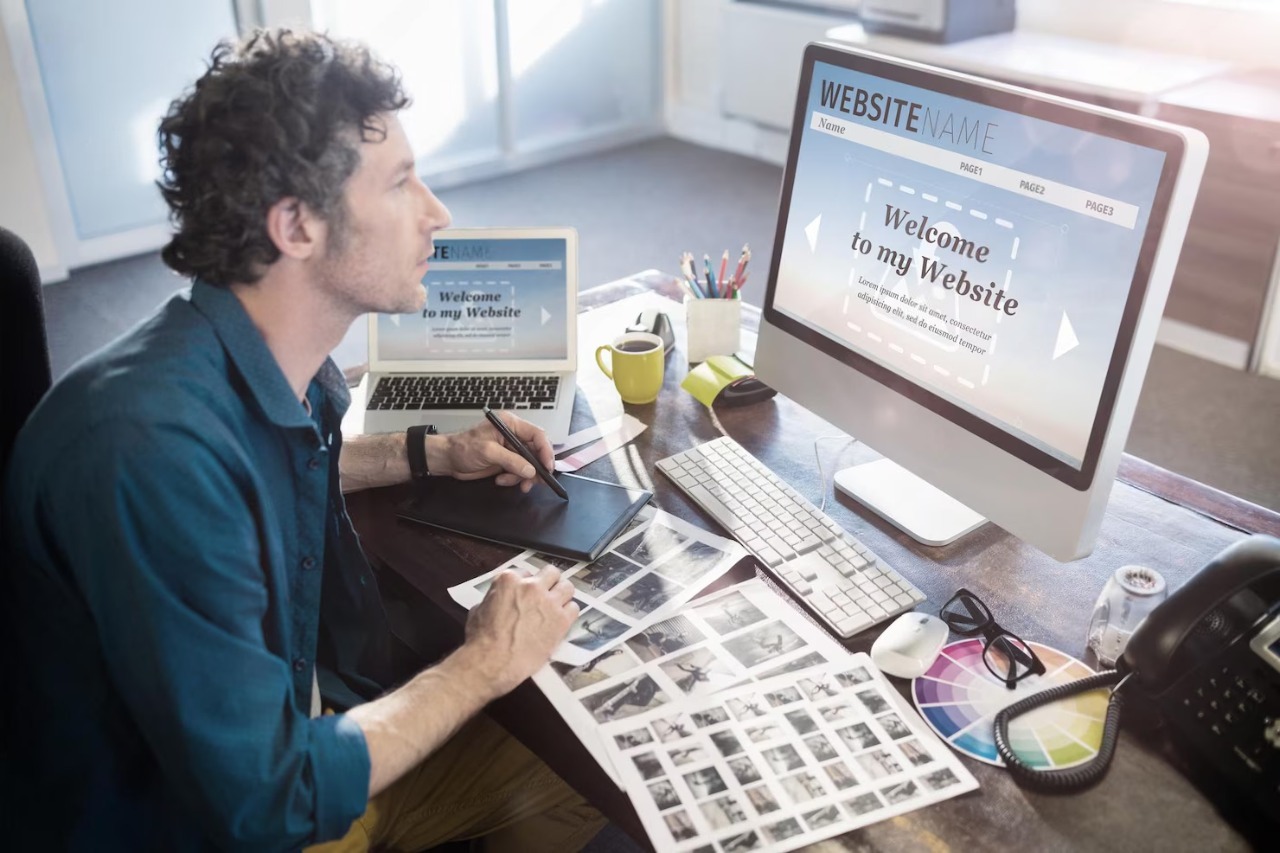

Website redesigns were considered nonessential, something that businesses would only think of doing if their site looked old-fashioned or was not bringing enough traffic. However, the digital world has changed so fast that continuing to have the same online image is not an option anymore; it has become a strategic necessity to refresh it. User expectations are higher, search algorithms are more advanced, and design standards change every year. A website is no longer a simple digital brochure; it is the core of a brand's online identity, a sales tool, and, in many cases, the first impression that customers get of a business.
This manual addresses the increasing importance of website redesigns in 2026, the ways of recognizing that it is time for a new website, the vital features of a successful redesign, and the stages of your transformation. Understanding the website redesign process will assist you in making a website that remains up-to-date, acts more efficiently, and connects with today's digital-first audience, whether you are a business owner, marketer, or creative professional.
By 2026, the rulebook of digital presence will be rewritten to meet the new standards. Good-looking websites no longer impress the audiences; instead, they demand websites to be intuitive, blazing fast and deliver tailored experiences. These are the reasons why responsive web design is more important to redesign your website now than at any other time:
1. User behavior keeps changing
Consumers of the present time are inclined towards interactive, mobile-first experiences. In this way, people search through multiple gadgets, change between platforms, and demand immediate access to information. If the loading of the pages is slow or the navigation is cluttered, visitors will leave without hesitation and within a matter of seconds.
2. Introduction of future design elements
Some of the main topics for design in 2026 will be clean minimalism, micro-interactions, 3D visual elements, bold typography, and accessibility. The websites, which were designed more than three or four years ago, mostly contradict the above-mentioned contemporary web design concepts.
3. Personalization fueled by AI on the rise
AI integration has been a major breakthrough of digital lifetimes. Some of the most common new features are: Personalized content recommendations, behavioural targeting, and chat-based assistance. Websites without AI elements are often perceived as being behind the times or less competitive.
4. Accessibility getting more attention
Access standards have been significantly improved over the years. Users want sites that are able to serve different needs and show different levels of abilities by providing good contrast, keyboard navigation, compatibility with assistive technology, and inclusive design. A redesign is the perfect way to provide these updates.
5. Search Engine Optimization and Performance Updates
It is well known that search engines have been giving more and more priority to the user experience, speed of loading, and mobile-friendliness. A modern redesign is a guarantee that your site is in line with the latest ranking factors, thus getting both better organic reach and conversions.
Related Post: What is Web Design: A Complete Guide
It is not necessary for every website to be entirely changed, but a few indicators can point to the fact that it is time to rethink your online presence. A website redesign should be your priority if you recognize any of these signs:
1. Your website is a throwback from the past
If the visual design of your platform doesn't mirror the trend of the day or your company's evolution, the users won't even need to ask how they will know that. Trust factor frequently gets lowered by outdated looks.
2. Loading speed is slow
It is believed that websites with a loading time of over 2–3 seconds lose half of their visitors. Slow-loading pages affect SEO, conversions, and user satisfaction.
3. Bad mobile experience
As mobile users have taken over the web, any problems with responsiveness, design, or usability on smaller screens point to the need for a quick update.
4. Traffic or conversion rates going down
The fall of performance metrics such as engagement, leads, or sales is the clearest indication that your site is not satisfying its users.
5. Difficult navigation
If users have a hard time locating information or the most important actions (such as contacting you, signing up, or purchasing), it negatively affects the user experience and, thus, the entire sales process.
6. Security vulnerabilities
The reason for which older websites may be considered unsafe is that they typically operate on outdated plugins, themes, or CMS versions, thus endangering your data. Redesigning gives you the assurance of updated security practices.
7. Inconsistency with your brand identity
In case your business has been through a rebranding phase but your website is still mirroring the old communication, tone, or visual style, you are confusing your audience by sending them mixed signals.
In order to create a website that looks new, is easy to use, and is ready for the future, it is necessary to have the right elements implemented. A successful redesign in 2026 means much more than just appearances; it's about functionality, user experience, and growth potential.
1. User-centered design
Knowing your audience is the very basis of any successful redesign. The mainstay of the concept, whether it is the layout or the content, should be personalized to the users' needs and their behaviour.
2. Modern, minimal, and functional UI
Uncluttered designs, useable space, easily readable fonts, and visual hierarchy are the things that today's users ask for. The design decisions should be the user's guide from one page to another without any effort on their part.
3. Enhanced UX with micro-interactions
Micro-interactions like button animation, hover providing, and scroll-triggered events are small and discreet, but still they make the user more involved and do not confuse him with too much action.
4. Mobile-first architecture
Instead of just modifying desktop creations for mobile, the redesign should focus first on mobile and then be extended to other devices.
5. Fast performance and optimized assets
Making the site load fast and smoothly is the result of image compression, the use of a lightweight framework, and code optimization.
6. SEO friendly structure
Good code, metadata optimization, well-structured content, and a smart linking strategy all aim at yielding higher rankings in search engines.
7. Accessibility compliance
An overhauled website has to adhere to accessibility regulations, thus providing the same experience to everyone regardless of their limitations.
8. Solid brand storytelling
The gist of the content is where modern websites put most of their reliance. It means that there should be clear communication, new pictures, and brand-consistent visuals.
9. AI integration and personalization
Some of the AI innovations that make the user experience better and more pertinent are predictive search and tailor-made suggestions.
10. Scalable backend architecture
An effective redesign is a reorganization that allows your enterprise to keep on growing. No matter if it is by new pages, features, or functionalities, scalability makes sure that the site of your business keeps up with the changes without any problem.
The task of revamping a website might be intimidating to you, especially when you think of the involvement of the different departments and the goals. By breaking the process down into steps, it becomes easier to ensure that the change will be without any problems and that the results will be successful.
1. Perform a performance and UX audit
Plunge into an in-depth study of the existing website. Understand what increases the value of the site, what is not in use, and what needs to be updated. Collect data regarding user behaviour, heatmaps, SEO performance, loading speeds, and mobile responsiveness.
2. Define your goals and KPIs
Make a point of setting goals for the site, clarifying how the redesign will impact your business. If you want to achieve higher conversion rates, strengthen the brand, simplify navigation, or increase SEO, figuring out the objectives before you start will give your redesign a new sense of purpose.
3. Understand your audience
Research users and conduct surveys or interviews aimed at identifying audience expectations and frustrations. User insights serve to create a practical and beneficial website.
4. Build a redesign strategy
Detail the site framework, content strategy, visual style, features, and technical specifications. This guide keeps your redesign organized and productive.
5. Create wireframes and prototypes
It is better to create wireframes to see the layout and user flow before designing. Prototypes enable you to check out new features and make your first changes.
6. Focus on content creation
Redesigning your website is the best moment to change your communication style. Refresh or create new pages that reflect your brand's voice, make the text easier to read, and be in line with the user's intention.
7. Design the UI and refine the visual style
Once the wireframes have been given the green light, the next step is the work of the designer. While designing the UI, it is important to keep the brand characteristics and at the same time, the design should be lucid, accessible, and consistent.
8. Develop and test
The moment the design is complete, the website developers in India come to the rescue and implement the site. The steps involved are writing the code, feature integration, and interface optimization for cross-device and speed hardening. A thorough test run is what the hallmark of a good job in this phase should be.
9. Plan your launch carefully
Redesign launch has to be well thought out. Besides having backups ready and monitoring the analytics, you should also be testing your forms, making sure your redirects are working, and confirming that your SEO elements are in place so that you do not lose your ranking.
10. Monitor and improve
After the launch, enhance the performance of your site by keeping an eye on it through metrics evaluation, user input collection, and ongoing improvement.
It may take until 2026 to truly stay ahead integrating these advanced elements:
AI & automation
Usage of chatbots, smart searches, and predictive recommendations will help your clients.
Voice-search readiness
More and more people use voice assistants when they want to find something, so you should optimize your content for this kind of query.
Modular design system
The reusable components will make the site easy for you to prolong and upkeep.
Privacy-first experience
Quiet usage of data, easy cookie management, and secure user info handling will actually increase the user's trust.
Sustainability in web design
Using efficient coding and optimizing hosting will lessen your website’s carbon footprint, a trend that is gaining importance among users.
In 2026 a website makeover is not just an upgrade of the look; it is an opportunity to raise your brand, take technology on board, and offer valuable digital experiences to your users. Since the expectations keep on changing, having a fresh, fast, and easy-to-use site will give you a great competitive advantage.
Your aim might be to get more visitors, raise the engagement level, or present a stronger brand identity. The redesign process is the way to achieve your digital presence goals, which will be relevant, reliable, and future-proof.
With a well-thought-out strategy, user focus, and a vision that goes beyond tomorrow, your website redesign might turn your site into one of your greatest business assets in the coming years.
Need a fresh, modern website for your business or brand? We’re here to help with professional website design services. Get in touch with us today for a free quote.