7 Reasons Why Visitors Leave Your Website in 5 Seconds

At last, you attract visitors to your site. The traffic is flowing; clicks are taking place, and it seems like everything is great until you look at the analytics. The bounce rate is alarmingly high. So short is the average time on the site that it’s hardly 10 seconds.
So, what has gone wrong?
The reality is that many visitors make their choice to stay or leave your website in just a few seconds. Not only that, but they don’t scroll. They don’t spend time reading every word either. They scan the website, get the vibe, and make their judgment almost immediately. If the website looks strange, confusing, slow, or untrustworthy to them, they’ll leave, most of the time, without even a second thought.
We will examine the main reasons, through the help of the best website development company, why visitors are leaving your site in 5 seconds, after which you will learn the measures that will help you to prevent it.

Speed is more important than you may realize.
When someone clicks on your website, they expect it to open right away. Not in five seconds. Not after a loading animation. Instantly. If your site is slow, visitors will not wait but leave.
Besides frustrating users, slow loading brings negative associations and makes the brand less trustworthy. Visitors may even draw an unfair conclusion that the level of the business is also slow if the loading of the website is slow.
Some of the major reasons that websites run sluggishly are heavy images, unoptimized videos, unnecessary plugins, and poor web hosting. Even though the architectural elements may be attractive, if they slow the site down too much, they might end up being a failure.
People decide whether they like you most of the time even before they see your actual content. If you fail to attract them at this point, everything else will be pointless.
You can test your website speed using web tools like Google PageSpeed Insights or GTmetrix.
It’s on every visitor’s mind when they land on your website; first of all, that is, “What is this about, and is it for me?”
If your homepage does not give an answer to this question straight away, the visitors won’t waste their time with figuring that out.
Non-informative headlines, using too many fancy words without clarity, or simply stating generic things like “We provide excellence” do not lead to any significant effect. People need to know:
What do you offer?
Who is it for?
How does it help them?
When your communication is unclear or too general, visitors actually have no idea what is going on. When online, feeling confused usually means leaving instead of spending more time trying to figure things out.
The right way to communicate the main value propositions is to be straightforward and always focus on benefits.
Explore Related Blogs:
Related Post: [A Complete Guide to Responsive Web Design]
Related Post: [What is Web Design: A Complete Guide]
Related Post: [Best Tools for Professional Website Designers ]
Appearance is very important, especially on the internet.
If visitors perceive your website as a mess, old-fashioned, or just too chaotic-looking, they won’t be attracted to and feel comfortable with it. The overuse of colours, the use of different fonts that do not match, having too many items visible at the same time, or random pop-ups are things that may bring visitors’ attention very fast to the exit button.
People want the websites they visit to be tidy, orderly, and visually pleasant. They expect some empty space around the text, easy-to-read fonts, and a logically structured flow that guides them naturally from one point to another.
When visitors don’t know where to focus first or which step to take after, they disengage. A complicated layout can scare them away as if it were some hard labour. And simply, no one wants to be forced to work just to be allowed to follow a website.
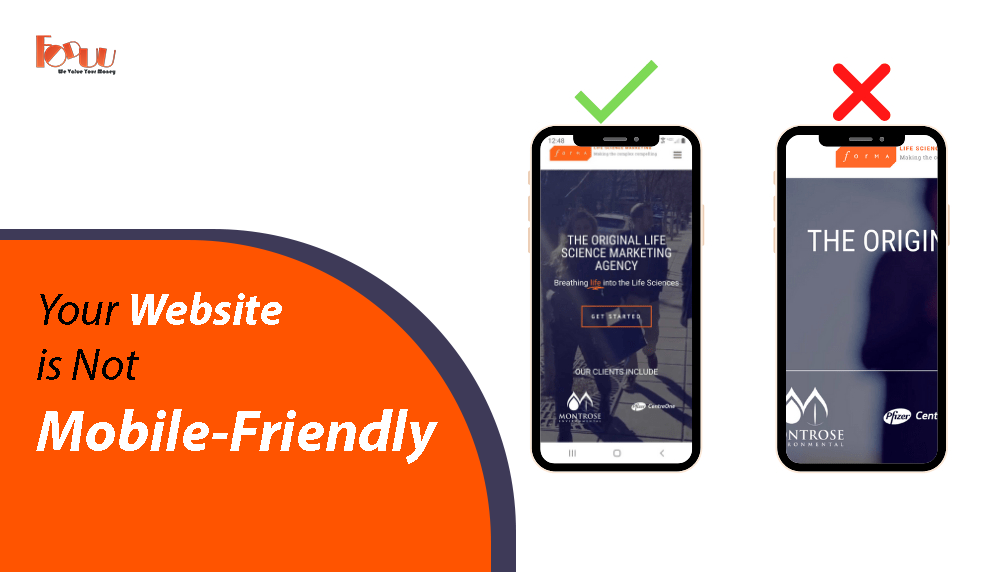
A large part of visitors these days use phones to surf the web. You are throwing away a huge audience if your website is not flashy and flawlessly working on cell phones.
You can check if your site design is usable on mobile devices by checking it with Google’s .
Typical mobile problems are:
Text that’s too small to read
Buttons that are hard to tap
Content going off-screen
Slow mobile loading speed
If the mobile experience is not up to the standard, visitors would naturally feel as if the site was not designed with their needs in mind. If something on mobile is knocking the bar of inconvenience, the users will exit faster than you can say “goodbye.”
Nowadays, mobile optimization is the very first step that one takes when establishing a website.
People do not resonate with websites that sound like they have been written by a machine or those monotonous corporate brochures.
Too much of the corporate jargon, buzzwords, and aggressive marketing language will drive people emotionally away from you. Instead of being "spoken to," visitors feel like they are being "sold to."
Humanized content is closely similar to a real conversation. It is aware of the visitor's troubles, questions, and feelings. It is natural, transferable, and helpful in tone.
Visitors will simply look for another brand that truly understands them if they are not made to feel accepted.
When visitors cannot easily locate the required information, they usually leave very quickly.
Excessive options in menus, ambiguous labels, or hidden navigations disorient users. When individuals have to exert too much mental effort to decide where to click next, their level of frustration increases significantly.
Navigation that is well done is practically unnoticed. It leads visitors in such a natural way that they don’t even realize it.
In case navigation fails, visitors experience a feeling of being trapped, and thus, leaving the site becomes the most straightforward choice.
Visitors require guidelines to lead them.
If your website is not directing the users to the next step, whether it is reading more, investigating the services, making contact, or signing up, they may just do nothing. Doing nothing is the usual pathway to exiting.
A definite call to action allows visitors to take the next step with certainty. In the absence of this, your website looks like a passive being with nothing more to offer.
A call to action doesn’t necessarily have to be pushy. It is enough if it is clear, easy to see, and appropriate to what the visitor is looking for.
Visitors are not abandoning your website simply because they are impatient. They are going away because, in those few seconds, something didn’t feel right, wasn’t happening quickly enough, wasn’t clear enough, wasn’t trustworthy enough, or wasn’t relevant enough.
Your website is more than just a digital space. It is an experience. And experiences are evaluated on an emotional level first, then logically second.
When your main focus is on clarity, speed, simplicity, and human connection, visitors won’t merely stay longer; they’ll become active, interested, and even convert.
Simply put, when your website seems easy, helpful, and genuine, 5 seconds are merely the start.
At FODUU, we specialize in creating conversion-focused, user-friendly websites that address exactly these challenges. Our web design approach focuses on:
By aligning design, usability, and SEO best practices, we help businesses keep visitors engaged longer, reduce bounce rates, and convert traffic into leads.
If your website is losing visitors, it may be time to rethink your design strategy.
Contact us today to build a website that users stay on and search engines trust.