Top Digital Menu Trends in the Indian Food Industry
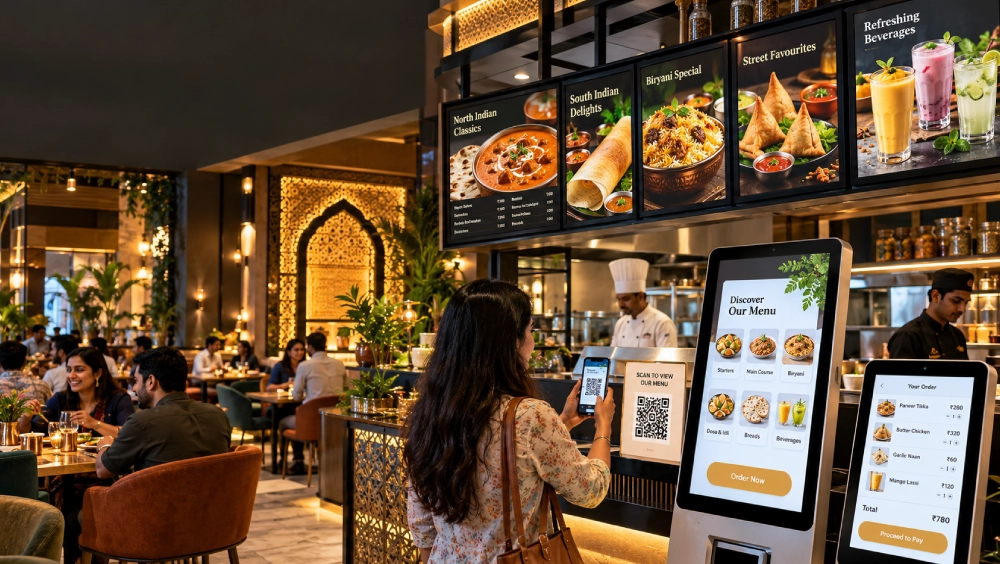

The way people explore restaurant menus is changing, as customers are expecting clear food descriptions, attractive pictures, easy access to prices and a convenient way to discover dishes before ordering. At the same time, the restaurant owners need greater flexibility to update menus, manage changing food costs and keep customers informed about available items.
Now digital menus are becoming an important part of restaurant technology. From QR code menus to AI-assisted menu creation and multilingual food displays, these solutions are changing how restaurants present their offerings and manage everyday operations.
In India, where restaurants range from neighborhood cafés and street-food outlets to premium dining establishments and large restaurant chains, the digital menu technology offers different possibilities for different businesses.
In this post let's explore the top digital menu trends in the Indian food industry in 2026 and how restaurant owners can use them to improve customer experiences and simplify menu management.
QR code menus have made it easier for customers to browse restaurant offerings using their smartphones. Instead of waiting for a printed menu, the diners can scan a code on their table and view the available dishes directly in their mobile browser.
The important step is to make these menus easier to manage. The modern platforms allow restaurants to update menu information while keeping the same printed QR codes. This is particularly useful when the prices change, as when the seasonal dishes are introduced or popular items become temporarily unavailable. Take this example, a cafe can update its breakfast menu in the morning and highlight different beverages later in the day without replacing its table displays.
For the restaurants that frequently change the menus, this kind of flexibility makes a digital menu for restaurants more practical than a static PDF or printed booklet.
Creating a digital menu can take time, especially when a restaurant has hundreds of dishes, multiple categories and an existing printed menu to cater. Also, the AI-assisted tools are making this process easier by extracting menu information from photographs and helping organize items into a digital format.
Now instead of entering every dish manually, the restaurant owners may be able to upload photographs of their existing menus and use AI to speed up the initial setup. This is particularly useful for smaller restaurants that lack a dedicated marketing or technology team. However, AI-generated information should always be checked before its publication and should not replace proper verification.
Customers often make decisions based on how a dish looks like it’s well-presented photograph that communicates the portion size, ingredients and presentation instead of a short text description alone. With the help of digital menus, then it gives restaurants more room to showcase their food through images, descriptions and clearly organized categories.
A bakery, for instance, can display photographs of cakes, pastries and seasonal specials, while a North Indian restaurant can highlight signature thalis, and a café can showcase its coffee varieties and desserts. Also, the AI powered image enhancement is emerging as a useful option for businesses who do not regularly hire professional food photographers. These are the tools that can improve ordinary photographs, although the images should still represent the actual dishes that the customers receive. Here, the goal is not simply to make a menu look attractive, but to give customers a clearer idea of what they are ordering.
India's linguistic diversity makes multilingual menu experiences valuable because a restaurant serving tourists may need English and Hindi menu options. In the case of a local establishment, then it may benefit from displaying information in the regional language familiar to its customers.
All of this is possible with digital menus as they offer multiple language options without printing separate sets of menus. Further, the hotels, restaurants in tourist destinations serving customers from different regions can benefit from such menus.
The automatic translation tools in the digital menu can speed up the process. However, the restaurant owners should review translations carefully such as Food names, regional specialties and ingredient descriptions as they can lose their meaning when it is translated incorrectly. So you need to have a clear language as it helps customers to understand the menu, make informed choices and feel more comfortable ordering unfamiliar dishes.
A QR code menu does not necessarily need to stop at displaying dishes rather it should show the emerging trend and browsing experience with digital ordering. This appeal allows the customers to select items and submit orders through their phones where the platform supports this functionality. This support is extremely useful during the busy lunch periods, weekend rushes and other times when the staff members are handling several tables simultaneously.
For instance, the customers at a quick service restaurant can browse available meals and submit their selections digitally rather than waiting for someone to take their order. While some of the systems can connect orders to billing software and kitchen display systems, this reduces the need to communicate the same information repeatedly.
The printed menus can become outdated quickly when the ingredient costs change, seasonal dishes rotate and popular items are unavailable before the end of service. By having digital menu management, then it solves such issue and allows authorized staff to make changes without sending menus back for printing. This means that the restaurants can update prices, introduce special offers, change descriptions and mark unavailable dishes directly through their management platform.
Take this as an example where a restaurant runs out of a popular dessert during the evening rush, and has an updated digital menu that can inform customers before they place an order. This helps in avoiding disappointment and unnecessary conversations, and is particularly useful for the businesses that have multiple outlets, centralized menu management. Real time menus help maintain consistent information across locations, depending on the platform's capabilities.
A traditional printed menu provides limited information about how customers interact with individual dishes. However, when the restaurant owners want to observe sales, and understand browsing behavior then it may require additional data. The digital platforms that can provide insights such as menu views, popular categories, customer interactions and ordering activity, depending on the features available.
These are the insights that can help restaurants identify which dishes attract attention and which sections may need improvement.
For instance, if the customers frequently view a particular category, but rarely purchase from it, then the restaurant might review its pricing, descriptions, photographs or product selection. Also, here the analytics should be interpreted carefully because a high number of menu views does not automatically translate into higher sales, and further the customer privacy should be respected when collecting or analyzing data.
Digital menus are evolving from simple online food lists into more flexible tools for customer engagement and restaurant operations. QR code access, AI-assisted creation, multilingual displays, real-time updates, menu analytics and ordering integrations are among the developments shaping the Indian food industry in 2026.
Not every trend will be equally useful for every restaurant. A well-designed digital menu for restaurants should make browsing easier for customers and menu management simpler for staff. When the technology supports the restaurant's actual needs, it becomes more than a modern feature: it becomes a practical part of running a better-organized food business.