Why Every Restaurant Needs a QR Code Menu- A Complete Guide to Going Digital
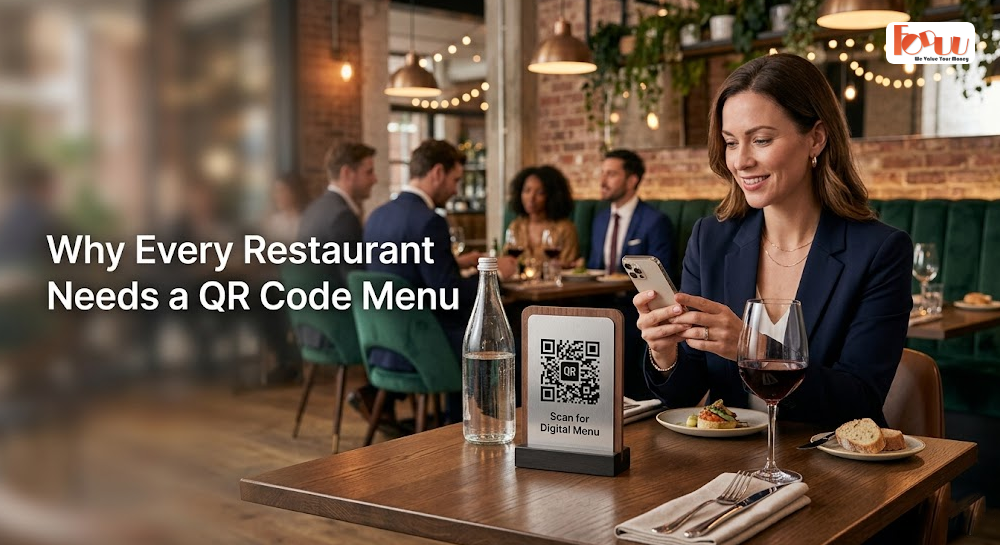

The traditional, laminated paper menu is officially dead weight. For decades, restaurants forced diners to flip through bulky, grease-stained booklets that were expensive to print, impossible to edit in real time, and were a hotbed for bacteria. Today, the modern hospitality landscape has moved away from the static paper. Now, tableside service has been transformed through the rise of the dynamic digital menu for restaurants.
This intersection of guest experience and technology has triggered a massive structural shift in dining areas. As what started as a pandemic-era safety fallback has locked itself in as a permanent consumer expectation. The contactless dining isn’t a temporary trend. It is the new baseline for efficient hospitality. Modern diners want speed, autonomy, and zero friction when they sit down to eat. Recent restaurant technology reports show that a staggering 84% of diners look at menus online before they choose a place to eat, and once seated, over 60% of consumers actively prefer scanning a QR code restaurant menu over waiting for a physical card.
Â
Diners want visual clarity and control over their ordering pace, and they want it instantly.
|
Restaurant Digital Menu Metrics |
The Impact Breakdown |
|
Consumer Preference |
60%+ of diners prefer scanning a QR code over handling physical booklets. |
|
Operational Savings |
Average printing cost reduction of $2,000–$5,000 annually per location. |
|
Order Volume Bump |
Average ticket size increases by 15% to 20% via automatic digital upselling. |
Â
Those operators that are stalling on digital transformation are facing a costly mistake. Cause running a food business on paper means throwing revenue out the window. Every single year, the average independent restaurant spends between $2,000 and $5,000 for just printing and reprinting menus to handle supply chain price shocks, ingredient swaps, and damaged sheets. By transitioning to a seamless restaurant digital menu, venues completely eliminate the printing overhead and boost order accuracy. Whether it is a bustling downtown hotspot or a trendy neighbourhood, you can utilize a sleek QR menu for cafes. By having this technology, you link the kitchen’s live inventory directly to the diner’s smartphone screen, and turn every single table into a high speed, and revenue generating digital portal.
Â
A QR Menu Maker or digital menu maker is a cloud-based software platform that allows restaurateurs to convert their traditional text-based food lists into interactive, mobile-optimized digital storefronts. Instead of paying expensive graphic designers every time to make seasonal dish changes, now operators can use a specialized restaurant menu maker to instantly upload food items, set prices, add high-definition food photography, and categorize their inventory.
But how does that digital menu actually reach the customer’s phone? That is where the QR code comes in.
A QR code acts as a physical hyperlink. For instance, when a customer sits down, they simply point their smartphone camera at a unique QR code sticker or acrylic stand placed on the table. Here, the camera instantly detects the matrix barcode and opens a web browser displaying the restaurant's live, interactive menu completely, which eliminates the need for a physical app download.
The one thing to note is that when you are setting up this architecture using a qr code menu maker for restaurants, you must first understand the massive operational difference between the two primary types of QR codes, Static QR Codes and Dynamic QR Codes.
Â
A static code encodes a fixed, hardcoded web link directly into the matrix block. If your menu link changes, or if you want to switch to a different menu provider down the road, then your printed QR codes become completely useless. You would have to scrape off every single table sticker and reprint them from scratch.
Â
This is the gold standard for modern hospitality. A dynamic QR code menu generator creates a flexible tracking link. In this, the visual pattern of the QR code remains exactly the same forever, but you can change the underlying menu link, update your layout, modify pricing, or switch platforms instantly in the cloud. You can print your table codes exactly once, and you will never have to replace them.
Another important thing is the QRs universal smartphone compatibility, which makes it so friction-free. The fact is a testament to this, as in 2026, over 95% of active smartphones feature native QR code scanning built directly into their default camera apps. For instance, a diner does not need to sign up for an account, register their email, or download a bulky third-party app. They simply can scan, scroll, and order within a matter of seconds. This makes the digital menu maker an incredibly powerful tool for boosting tableside efficiency.
Â
Deploying a digital menu system isn't just about showing off slick tech to your guests, but it is a calculated business move that fundamentally optimizes your entire restaurant's profit and loss (P&L) statement. Because when you transition from paper to a modern digital menu maker for restaurants, then you instantly unlock a massive suite of operational and financial advantages.
Here is exactly how a digital menu framework transforms your daily business operations:
Traditional restaurant operations suffer from a constant financial drain caused by printing paper menus. Why? Every time an ingredient price changes, a dish is discontinued, or a menu gets stained by a spill, you have to pay for a reprint. By utilizing an online menu maker for restaurants, you can drop printing overhead cost to an absolute zero. With QR codes, you print it for your table once, and you eliminate your menu management budget.
Did your kitchen just run out of the evening's special ribeye steak at 8:00 PM? In the case of a paper menu, your servers will have to awkwardly apologize to tables all night after they try to order it. However, with a dynamic QR code restaurant menu, your floor manager can cross out an out-of-stock item or adjust a price tier instantly from a smartphone dashboard.
On a busy weekend night, your guests can often sit at a table for 10 to 15 minutes, and just wait for a server to bring them water and a physical menu. While a digital menu cuts this bottleneck entirely where guests just scan the code, the second they sit down, to browse items immediately, cutting down the time it takes to get food from the kitchen to the table.
Physical menus are among the dirtiest items in any public establishment, as it is passed through hundreds of unwashed hands weekly. In comparison, a digital system offers an inherently sterile solution, where diners can use their own personal smartphones, establishing a highly hygienic environment that appeals directly to modern safety-conscious guests.
Restaurants using digital menus report an average 15-minute reduction in total table turnaround time, which allows them to serve more parties per shift. How it helps?
When guests can view the menu instantly and settle their bill digitally, your table turnover efficiency skyrockets.
Human servers frequently forget to suggest add-ons, premium toppings, or beverage pairings during a busy rush. A digital menu layout never forgets. The software can be configured to automatically prompt a guest with highly targeted pairing suggestions—such as Add truffle fries for $3 or Pair with a craft beer.
Digital menus allow you to break past the structural limitations of flat paper text. Here, you can embed rich storytelling, detail your ingredient sourcing, share your chef’s background, and integrate active links to your restaurant’s Instagram page or TikTok reviews directly into the browsing layout.
Modern consumers actively prefer supporting sustainable, green businesses. This eliminates your paper waste, chemical laminates, and single-use disposable paper sheets, which also lowers your restaurant's carbon footprint.
Â
Â
Setting up a digital dining space is an incredibly straightforward process that requires zero coding knowledge. You just need to create, upload, generate, print/place codes, and ready it for scanning.
First, you log into a cloud based digital menu maker for restaurants to build your virtual storefront. You organize your menu structure by creating clear categories like appetizers, mains, desserts, and beverages.
You upload your dishes, add accurate descriptions, set pricing, and drop in high-definition food photography.
Once your layout is configured, then the platform's QR code menu generator instantly creates your unique table matrix codes.
You download these graphics, and print them onto durable table cards, acrylic tents, or adhesive stickers.
Finally, you place the displays directly on your tables, bar counters, or lounge areas.
When a diner sits down, they simply point their smartphone camera at the code. The device reads the matrix block and instantly launches your interactive food portal in less than two seconds. This allows the guest to begin browsing your live inventory seamlessly.
Â
To truly maximize your return on investment, a premium digital menu for restaurants must go beyond displaying a basic flat PDF. Instead, it should have an active, feature-rich infrastructure, and the following elements in it:
The QRs layout must load instantly and adapt flawlessly to any smartphone screen, utilizing high-definition photos and video previews of signature dishes.
Your staff must be able to change prices or cross out unavailable items instantly. Also, the menu should offer one-click translation to cater directly to international tourists.
Do try to include toggle buttons for vegan, gluten-free, or nut-allergy restrictions to ensure that diners have a highly transparent dining experience.
Give your guests the freedom to send orders straight to the kitchen, and pay their bill directly from their phone via Apple Pay, Google Pay, or credit cards.
Every individual code must be tied to a specific table number to prevent ordering errors. So, the QRs interface should reflect your restaurant’s unique colours, logos, and fonts.
Your QR must have a backend dashboard so to track exactly which dishes get the most clicks. This helps you optimize inventory and reduce food waste.
Â
When evaluating long-term restaurant profitability, then you should compare the modern restaurant digital menu against legacy paper sheets as it will reveal a massive operational gap. Simply saying that a traditional printing simply cannot compete with cloud-based agility.
|
Feature Matrix |
Traditional Printed Menus |
QR Code Restaurant Menu |
|
Upfront & Ongoing Cost |
High (constant printing/re-printing) |
Near Zero (print table codes once) |
|
Update Flexibility |
Days of delay (design, proof, print) |
Instant (live cloud updates in seconds) |
|
Hygiene Factor |
Low (passed through hundreds of hands) |
Maximum (sterile, personal device use) |
|
Marketing Capability |
Static text and fixed pricing |
Dynamic upselling, video links, social CTAs |
Â
Paper menus lock you into a rigid framework. For instance, if an ingredient price spikes overnight, then you are forced to swallow the margin loss or cross out prices with a pen, which looks cheap and unprofessional to guests.
Furthermore, printed layouts offer zero tracking data. While a QR code restaurant menu acts as an active marketing engine that captures consumer browsing behaviour, promotes high-margin combos automatically, and minimizes your restaurant’s environmental footprint by completely eliminating paper waste.
Â
A digital menu is a highly optimized silent salesperson that leverages visual psychology to drive up average order values. By setting up your system with a modern digital menu maker for restaurants, you will put a conversion engine directly into the guest's hand. How it helps?
Humans eat with their eyes. While paper menus have limited space for images, a digital restaurant menu maker allows you to attach beautiful, high-definition photos to every dish. Upon seeing a crisp, bubbling wood-fired pizza will increase cravings, which also triggers immediate impulse buys.
The system uses smart algorithms to suggest logical pairings. For instance, when a guest adds a cocktail to their cart, the menu can automatically suggest an appetizer, like pair this with our signature sliders for just $4 extra.
Guests can make decisions faster with QR as they can filter by dietary preferences. Because they select their own modifications like swapping for a gluten-free bun or adding extra sauce. Here, the miscommunication between the server and the kitchen is entirely eliminated, which protecting your food costs.
Â
The beauty of a modern cloud-based menu is its extreme versatility. It adapts seamlessly to any hospitality business structure, and solves unique operational bottlenecks across the board.
Speed is everything during the morning rush. For instance, when implementing a fast-loading QR code cafe menu, then it allows line weary remote workers to grab a table, scan, pay, and order their lattes instantly without standing in a long line at the counter.
When premium venues use a high-end digital menu for restaurants, then it offers interactive wine pairing maps and detailed stories about ingredient sourcing, which enhances the luxury vibe without cluttering the table.
These high-volume spots use QR technology to eliminate long order lines. Also, diners can scan codes mounted on windows or walls, submit their orders, and wait for a pickup text notification.
Hotel operators can place unique codes inside rooms to manage room service directly, which completely replaces outdated in-room paper binders. Moreover, cloud kitchens use a universal digital menu for cafe and virtual brands to manage multiple digital storefronts from a single, unified kitchen hub.
Â
To transition your business away from the legacy paper to a QR code is achievable. You just need to follow the below mentioned steps to ensure a seamless menu launch.
First partner with a feature rich digital menu maker that aligns with your operational workflows, and also supports your instant dashboard needs.
You can group your inventory into logical paths such as signature starters, mains, sides, and dynamic seasonal drinks to manage your inventory.
Add accurate item descriptions, precise pricing data, allergy warnings and high-definition food photography into the menu to demonstrate proper information.
Use the platform’s built in QR code menu generator to create your unique table that assigns graphics.
Scan the generated codes across multiple iPhone and Android devices to verify that the menu will load instantly and you have done the scaling correctly.
Finally output your codes onto durable materials like clear acrylic table tents, metal plates, or waterproof stickers, and then place them clearly on the tables, bar tops, and lounge areas.
Â
While implementing a digital menu for restaurants is a massive operational win, but execution failures can frustrate your guests and hurt your table turnover. To avoid all these common setup blunders, follow these steps to ensure a flawless tableside experience.
Stop forcing diners to pinch, zoom, and scroll across a massive, unreadable paper menu PDF as it is the fastest way to kill the user experience. Your QR code restaurant menu must feature a responsive, mobile-first design that adjusts perfectly to any phone screen.
If your digital interface takes longer than three seconds to open due to uncompressed images, then guests will quickly give up and lose patience. So, keep your assets lightweight and fast.
Blurry, poorly lit food photos look unappetizing and unappealing. Also, hiding the item modification costs or failing to update out of stock items will break consumer trust.
Never force diners to download an app or fill out a long registration form just to see what you serve. Just keep the access instant, and regularly check your physical table stickers to make sure that they aren't scratched or unscannable.
Â
A cloud-based digital menu for restaurants does more than just serving tableside diners. It acts as a powerful local discovery engine that drives foot traffic straight to your front door. Unlike flat paper sheets, an interactive menu lives directly on the open web, which makes your food fully indexable by search bots.
When there are hungry consumers, they search for specific phrases like best gluten free pasta near me on Google or Apple Maps, according to which search engines crawl live web text. You must have an optimized restaurant digital menu to present your specific dishes, ingredients, and categories so that it can rank for hyper localized food cravings.
Search engines can easily read and index clean HTML text structures, but they struggle to pull data from flat PDFs or image files. Cloud hosting will ensure that your entire culinary line-up is instantly visible to digital web crawlers.
As voice assistant searches are surging, consumers frequently ask their phones, where can I get a vegan burger nearby? Having such a structured digital menu content will ensure that your venue is perfectly positioned to capture these high intent, immediate traffic leads.
Â
An effective layout on a restaurant menu maker blends aesthetics with behaviour mechanics. So, have a digital interface that can guide a guest’s eyes directly towards the high margin items while ensuring an effortless browsing experience.
You must use clean, sans-serif fonts with high contrast. Remember to keep your font sizes legible, so that guests can easily browse your dishes even in a dimly lit bar or outdoor patio.
Do not crowd the screen with unnecessary elements. Just have a feature crisp, well-lit hero images exclusively for your signature dishes and high profit appetizers to trigger fast buy.
Use the QR code menu maker to group items logically into collapsible accordion tabs. Also, incorporate warm accent colours like subtle reds, oranges, or deep greens to stimulate appetite and to highlight your best-selling combos.
Ensure that your primary action items such as add to order or view cart are pinned to the bottom of a user's mobile screen, to make the ordering process entirely intuitive.
Â
The evolution of the restaurant digital menu is moving rapidly beyond flat text and static images. As we look ahead, the emerging technologies are turning table screens into a highly personalized, intelligent dining interfaces.
Future systems will analyse past ordering history, local weather conditions, or time of day to instantly reorganize the layout. By having a guest scanning a digital menu for restaurants on a hot afternoon, then you might instantly see refreshing iced beverages highlighted at the top.
Much like rideshare apps, restaurants are beginning to experiment with smart pricing where the algorithms can automatically lower prices on high-inventory items during slow afternoon lulls, or nudge premium specials during peak weekend rush hours to maximize profit margins.
While flat photography is giving way to interactive 3D models, the diners will soon be able to project an exact, true to scale AR model of a dish right onto their physical table before ordering to complete eliminating guessing games and boosting customer satisfaction.
Â
Choosing the right technology partner is critical for a seamless digital transition. In this business, the FODUU QR menu maker stands out as the premier solution, which is specifically engineered to streamline restaurant operations while maximizing tableside revenue.
FODUU QR code has an intuitive, codeless dashboard, where your managers can upload dishes, organize categories, and deploy changes in minutes without receiving any technical expertise.
The advanced QR code menu generator of FODUU lets you modify pricing, swap photos, or toggle out of stock items instantly in the cloud. These printed table codes remain exactly the same, and saves you thousands in reprinting costs.
Your menu must not look generic at any time. FODUU allows you to seamlessly integrate your restaurant’s logos, signature colour palettes, and custom fonts to maintain a cohesive brand identity.
FODUU will eliminate predatory commissions and hidden software fees, which also offers a highly competitive, transparent pricing model that is built for independent eateries and large chains alike. Further, the QR is backed by dedicated, 24/7 customer support which helps your digital storefront to stay online and optimized through every busy dinner rush.
Â
The shift toward modern restaurant technology is no longer a temporary trend, rather it is a permanent industry evolution. You must transition to a high-performance digital menu as it is the single fastest way to insulate your business against rising printing overhead cost and severe labour shortages, which also shrinks your profit margins.
By consolidating your menu management into a single, cloud-based dashboard, you will empower your kitchen with real time operational flexibility, streamline tableside communication, and capture automated upselling opportunities that naturally boost your average ticket sizes.
In a highly competitive hospitality landscape, you must stay ahead so to provide your modern guests the seamless, hyper-hygienic, and visually engaging mobile experience they actively expect. Don't let your establishment get left behind by outdated paper workflows.
Stop wasting thousands of dollars on constant menu reprinting and start maximizing your operational efficiency today.
Ready to Revolutionize Your Tableside Experience?
Â